Buy chatboy.eu ?
We are moving the project
chatboy.eu .
Are you interested in purchasing the domain
chatboy.eu ?
domain@kv-gmbh.de · 0541-91531010
Buy chatboy.eu ?
How do you prove surjectivity?
To prove surjectivity, you need to show that for every element in the codomain, there exists at least one element in the domain that maps to it. One way to do this is by taking an arbitrary element in the codomain and finding a pre-image for it in the domain. If you can find a pre-image for every element in the codomain, then the function is surjective. Another approach is to show that the range of the function is equal to the codomain, indicating that every element in the codomain is being mapped to. **
How can one show surjectivity?
One can show surjectivity by demonstrating that every element in the codomain has a preimage in the domain. This can be done by showing that for every y in the codomain, there exists an x in the domain such that f(x) = y. In other words, the function "covers" the entire codomain, leaving no elements without a preimage. This can be shown through direct proof, by finding the specific preimage for each element in the codomain, or through a more general argument, such as showing that the function is onto. **


Similar search terms for Surjectivity
Top-Angebote
Products related to Surjectivity:
-
Shiseido Makeup Technosatin gel lipstick satin lipstick shade 402 Chatbot 4 gShiseido Makeup Technosatin gel lipstick, 4 g, Lipsticks for Women, Beautifully accentuated lips never go out of style. The Shiseido Makeup Technosatin gel lipstick lipstick envelops the surface of your lips in a continuous layer of irresistible and rich colour, accentuating any makeup look perfectly, whether you’re heading to work, a meeting or a party. It allows you to emphasise your lips while also giving them the shape you want or a fuller look. In just a moment, it will give your lips a gorgeous colour and perfect shape, making them the centre of attention and irresistibly kissable. Characteristics: high pigmentation give lips a fine gloss moisturises and cares for your lips How to use: Apply lipstick to lips from the centre to the corners using gentle strokes.22,53 £*Shipping: 3,99 £Secure redirect to the provider
-
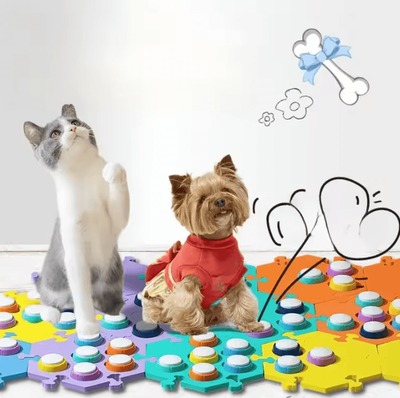
Inspire Curations TalkPaws Dog Communication Buttons For Pet Training & Interaction with Mats 6 PiecesStrengthen the bond with your pet through a fun and engaging way to communicate. These recordable dog communication buttons allow dogs and cats to associate words, actions, and needs with simple button presses, helping create interactive training...145,50 $*Shipping: 0,00 $Secure redirect to the provider
-
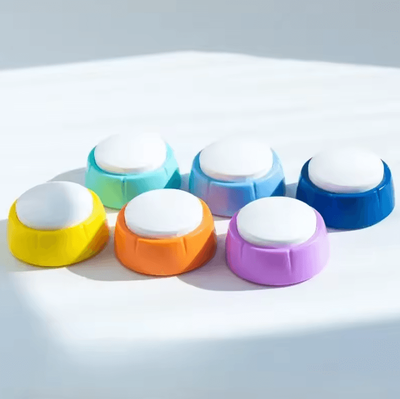
Inspire Curations TalkPaws Dog Communication Buttons For Pet Training & Interaction only Buttons 5 PiecesStrengthen the bond with your pet through a fun and engaging way to communicate. These recordable dog communication buttons allow dogs and cats to associate words, actions, and needs with simple button presses, helping create interactive training...130,00 $*Shipping: 0,00 $Secure redirect to the provider
-
Inspire Curations TalkPaws Dog Communication Buttons For Pet Training & Interaction with Mats 8 PiecesStrengthen the bond with your pet through a fun and engaging way to communicate. These recordable dog communication buttons allow dogs and cats to associate words, actions, and needs with simple button presses, helping create interactive training...153,00 $*Shipping: 0,00 $Secure redirect to the provider



-
How can one check images for surjectivity?
One can check images for surjectivity by examining whether the range of the function covers the entire codomain. To do this, one can analyze the function's output for different input values and determine if every element in the codomain is covered. If the function's image covers the entire codomain, then the function is surjective. Another approach is to use the definition of surjectivity, which states that for every y in the codomain, there exists an x in the domain such that f(x) = y. By verifying this condition for all elements in the codomain, one can determine if the function is surjective. **
-
Why do we need injectivity, surjectivity, or bijectivity?
Injectivity, surjectivity, and bijectivity are important concepts in mathematics because they help us understand the relationship between different sets and functions. Injectivity ensures that each element in the domain maps to a unique element in the codomain, which is useful for preventing information loss in functions. Surjectivity guarantees that every element in the codomain is mapped to by at least one element in the domain, ensuring that no information is left out. Bijectivity combines these two properties, providing a one-to-one correspondence between elements in the domain and codomain, making it easier to establish relationships and solve problems in various mathematical contexts. **
-
Is there no injectivity or no surjectivity here?
There is no surjectivity here. Surjectivity means that every element in the codomain is mapped to by at least one element in the domain. In this case, there are elements in the codomain that are not being mapped to by any element in the domain, so the function is not surjective. **
-
What is the injectivity and surjectivity of compositions?
The injectivity of compositions refers to the property of a composition of functions where if the composition of two functions is injective, then the outer function is injective. Similarly, the surjectivity of compositions refers to the property where if the composition of two functions is surjective, then the inner function is surjective. In other words, the injectivity and surjectivity of compositions are related to the properties of the individual functions within the composition. **

How can one formally prove injectivity and surjectivity?
To formally prove injectivity, one must show that for any two distinct elements in the domain, their images under the function are also distinct. This can be done by assuming two elements in the domain that map to the same element in the codomain, and then showing that this assumption leads to a contradiction. To formally prove surjectivity, one must show that for every element in the codomain, there exists at least one element in the domain that maps to it. This can be done by taking an arbitrary element in the codomain and finding a pre-image for it in the domain. This process must be repeated for every element in the codomain to establish surjectivity. **
What methods do you know to prove surjectivity?
One method to prove surjectivity is to show that for every element in the codomain, there exists at least one element in the domain that maps to it. This can be done by explicitly finding the pre-image of each element in the codomain. Another method is to use the concept of range and show that the range of the function is equal to the codomain. Additionally, one can use the contrapositive of the definition of surjectivity, which states that if there exists an element in the codomain that does not have a pre-image in the domain, then the function is not surjective. **
Top-Angebote
Products related to Surjectivity:
-
Inspire Curations TalkPaws Dog Communication Buttons For Pet Training & Interaction with Mats 9 PiecesStrengthen the bond with your pet through a fun and engaging way to communicate. These recordable dog communication buttons allow dogs and cats to associate words, actions, and needs with simple button presses, helping create interactive training...155,50 $*Shipping: 0,00 $Secure redirect to the provider
-
Uplifted Finds Predatory Engagement Wrestling Puppet Hub Predatory Engagement Wrestling Puppet HubTransform interactive play with the PredatoryEngagement Puppet, a professionalgrade interaction module engineered with manualsimulation logic. This highutility tool features a reinforced plush architecture and poseable limbs, specifically designed...85,97 $*Shipping: 0,00 $Secure redirect to the provider
-
Shiseido Makeup Technosatin gel lipstick satin lipstick shade 402 Chatbot 4 gShiseido Makeup Technosatin gel lipstick, 4 g, Lipsticks for Women, Beautifully accentuated lips never go out of style. The Shiseido Makeup Technosatin gel lipstick lipstick envelops the surface of your lips in a continuous layer of irresistible and rich colour, accentuating any makeup look perfectly, whether you’re heading to work, a meeting or a party. It allows you to emphasise your lips while also giving them the shape you want or a fuller look. In just a moment, it will give your lips a gorgeous colour and perfect shape, making them the centre of attention and irresistibly kissable. Characteristics: high pigmentation give lips a fine gloss moisturises and cares for your lips How to use: Apply lipstick to lips from the centre to the corners using gentle strokes.22,53 £*Shipping: 3,99 £Secure redirect to the provider
-
Inspire Curations TalkPaws Dog Communication Buttons For Pet Training & Interaction with Mats 6 PiecesStrengthen the bond with your pet through a fun and engaging way to communicate. These recordable dog communication buttons allow dogs and cats to associate words, actions, and needs with simple button presses, helping create interactive training...145,50 $*Shipping: 0,00 $Secure redirect to the provider
-
How do you prove surjectivity?
To prove surjectivity, you need to show that for every element in the codomain, there exists at least one element in the domain that maps to it. One way to do this is by taking an arbitrary element in the codomain and finding a pre-image for it in the domain. If you can find a pre-image for every element in the codomain, then the function is surjective. Another approach is to show that the range of the function is equal to the codomain, indicating that every element in the codomain is being mapped to. **
-
How can one show surjectivity?
One can show surjectivity by demonstrating that every element in the codomain has a preimage in the domain. This can be done by showing that for every y in the codomain, there exists an x in the domain such that f(x) = y. In other words, the function "covers" the entire codomain, leaving no elements without a preimage. This can be shown through direct proof, by finding the specific preimage for each element in the codomain, or through a more general argument, such as showing that the function is onto. **
-
How can one check images for surjectivity?
One can check images for surjectivity by examining whether the range of the function covers the entire codomain. To do this, one can analyze the function's output for different input values and determine if every element in the codomain is covered. If the function's image covers the entire codomain, then the function is surjective. Another approach is to use the definition of surjectivity, which states that for every y in the codomain, there exists an x in the domain such that f(x) = y. By verifying this condition for all elements in the codomain, one can determine if the function is surjective. **
-
Why do we need injectivity, surjectivity, or bijectivity?
Injectivity, surjectivity, and bijectivity are important concepts in mathematics because they help us understand the relationship between different sets and functions. Injectivity ensures that each element in the domain maps to a unique element in the codomain, which is useful for preventing information loss in functions. Surjectivity guarantees that every element in the codomain is mapped to by at least one element in the domain, ensuring that no information is left out. Bijectivity combines these two properties, providing a one-to-one correspondence between elements in the domain and codomain, making it easier to establish relationships and solve problems in various mathematical contexts. **
Similar search terms for Surjectivity
-
Inspire Curations TalkPaws Dog Communication Buttons For Pet Training & Interaction only Buttons 5 PiecesStrengthen the bond with your pet through a fun and engaging way to communicate. These recordable dog communication buttons allow dogs and cats to associate words, actions, and needs with simple button presses, helping create interactive training...130,00 $*Shipping: 0,00 $Secure redirect to the provider
-
Inspire Curations TalkPaws Dog Communication Buttons For Pet Training & Interaction with Mats 8 PiecesStrengthen the bond with your pet through a fun and engaging way to communicate. These recordable dog communication buttons allow dogs and cats to associate words, actions, and needs with simple button presses, helping create interactive training...153,00 $*Shipping: 0,00 $Secure redirect to the provider
-
Inspire Curations TalkPaws Dog Communication Buttons For Pet Training & Interaction only Buttons 6 PiecesStrengthen the bond with your pet through a fun and engaging way to communicate. These recordable dog communication buttons allow dogs and cats to associate words, actions, and needs with simple button presses, helping create interactive training...135,00 $*Shipping: 0,00 $Secure redirect to the provider
-
Inspire Curations TalkPaws Dog Communication Buttons For Pet Training & Interaction only Buttons 8 PiecesStrengthen the bond with your pet through a fun and engaging way to communicate. These recordable dog communication buttons allow dogs and cats to associate words, actions, and needs with simple button presses, helping create interactive training...140,50 $*Shipping: 0,00 $Secure redirect to the provider
-
Is there no injectivity or no surjectivity here?
There is no surjectivity here. Surjectivity means that every element in the codomain is mapped to by at least one element in the domain. In this case, there are elements in the codomain that are not being mapped to by any element in the domain, so the function is not surjective. **
-
What is the injectivity and surjectivity of compositions?
The injectivity of compositions refers to the property of a composition of functions where if the composition of two functions is injective, then the outer function is injective. Similarly, the surjectivity of compositions refers to the property where if the composition of two functions is surjective, then the inner function is surjective. In other words, the injectivity and surjectivity of compositions are related to the properties of the individual functions within the composition. **
-
How can one formally prove injectivity and surjectivity?
To formally prove injectivity, one must show that for any two distinct elements in the domain, their images under the function are also distinct. This can be done by assuming two elements in the domain that map to the same element in the codomain, and then showing that this assumption leads to a contradiction. To formally prove surjectivity, one must show that for every element in the codomain, there exists at least one element in the domain that maps to it. This can be done by taking an arbitrary element in the codomain and finding a pre-image for it in the domain. This process must be repeated for every element in the codomain to establish surjectivity. **
-
What methods do you know to prove surjectivity?
One method to prove surjectivity is to show that for every element in the codomain, there exists at least one element in the domain that maps to it. This can be done by explicitly finding the pre-image of each element in the codomain. Another method is to use the concept of range and show that the range of the function is equal to the codomain. Additionally, one can use the contrapositive of the definition of surjectivity, which states that if there exists an element in the codomain that does not have a pre-image in the domain, then the function is not surjective. **
* All prices are inclusive of VAT and, if applicable, plus shipping costs. The offer information is based on the details provided by the respective shop and is updated through automated processes. Real-time updates do not occur, so deviations can occur in individual cases. ** Note: Parts of this content were created by AI.